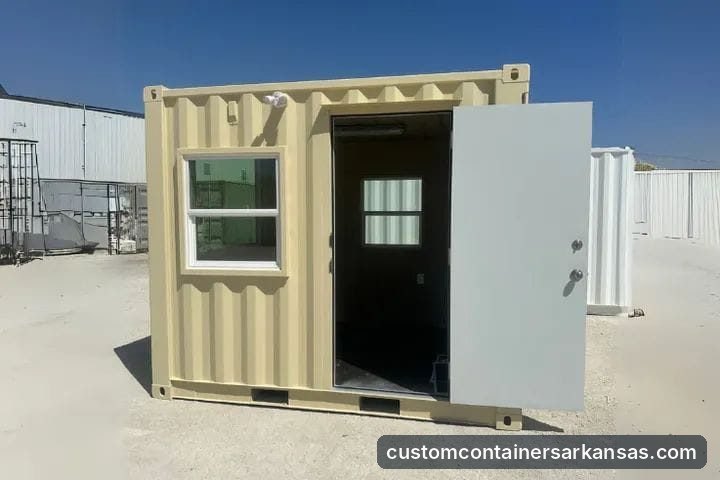
A shipping container pop-up shop gives a small business a storefront that locks up at night, stands up to weather and can be moved when the season ends. It's a popular idea for good reason, but the details decide whether it works: which side opens, where the power comes from, and what the city wants to see first. With Small Business Saturday this weekend, plenty of owners are thinking about a shop of their own for next season. Here's what to plan before you order.
Is a shipping container pop-up shop right for you?
A container makes the most sense when you'll be selling for more than a day or two:
- Testing a market. You want to try a new town, a busy corner or a farmers' market before signing a lease.
- Seasonal selling. Christmas trees, fireworks stands, produce, snow cones or game-day gear for a few weeks or months a year.
- Events and repeat locations. Festivals, ballfields, breweries or a spot you return to each spring.
Between seasons it doubles as storage for your stock and fixtures.
It isn't the right answer for everything. For a one-day craft fair, a tent and folding tables are simpler. If you need customers walking around inside, plumbing for food prep, or a space that meets the same rules as a permanent store, plan for more design work and more permit steps. Talk to your local building office before you commit.
Pick the opening: open-side, glass front or roll-up door
The opening shapes how customers shop. There are three common choices.
Open-side. Full-height doors along the long side swing open so the whole front of the container becomes your shop window. Customers browse from outside, and you work behind a counter. Our 40ft open-side shipping container has four sets of side doors, so you can open part of the front or all of it. The standard end doors still work for loading stock.
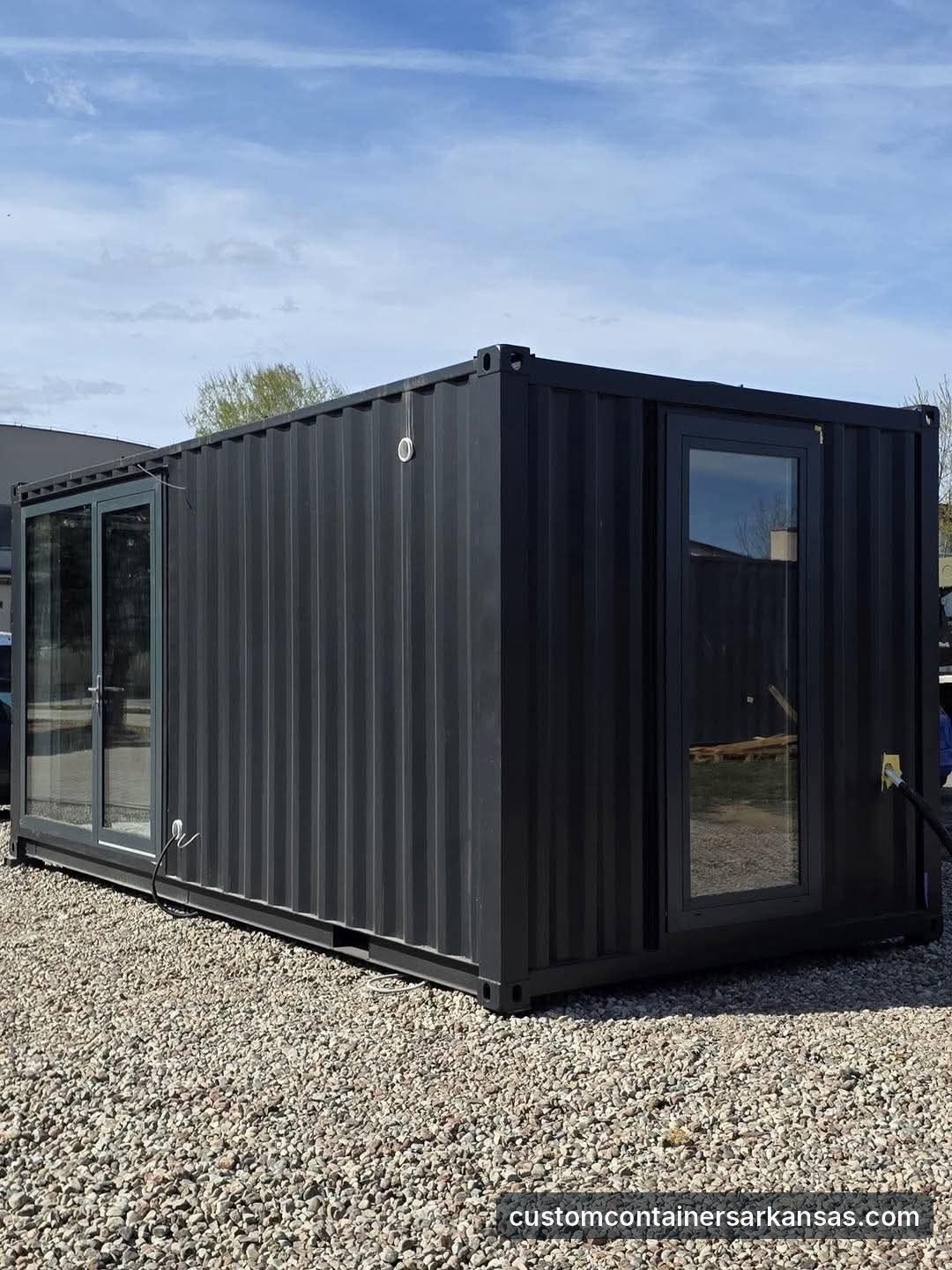
Glass front. Glass doors let people see in and give you daylight, which suits a boutique, gallery or studio-style shop where customers step inside. Our 20ft glass front studio has full-height glass doors and windows, a black exterior and a finished interior.
Roll-up door or service window. A roll-up door on the side or end gives a wide opening without doors swinging into your space. Our 40ft roll-up door container has four roll-up doors along one side, so you can open a single bay as a sales counter and keep the rest as stockroom. A cut-out service window with an awning is a common choice for food, drinks and ticket sales, where customers order at a counter.
Think about where your customers will stand. If the container will sit along a sidewalk or in a parking row, the long side usually faces the people. If it sits end-on to a path, an end opening may work better.
Plan how swing doors will stay open on a windy day, too. Container doors are heavy, and a gust can slam an unsecured door into a customer or your display. Tie each open door back to the container or a post, and close up when strong wind is in the forecast.
Power, lighting and a counter
Most pop-ups need power for lights and a card reader at the least. Some need much more, such as fridges, a coffee machine or heaters. List everything you'll plug in before you order. That list decides how the electrical should be laid out.
- Power source. Plugging into the host site's power is the simplest option. A generator works for events, but think about noise, fumes and where it will sit. Small solar setups can run lights and a card reader.
- Electrical inside. Lights, outlets and a breaker panel can be built in at our yard. Connecting power on site may need a local electrician.
- Lighting. Bright, even light inside makes products look good and helps people see in from outside. Add an exterior light if you'll be open after dark.
- A counter. A fixed counter at the opening, or a fold-down shelf on a service window, gives you somewhere to take payment and bag items. Shelving and racks on the back walls keep stock off the floor.
Insulation and heating or cooling are worth considering if you'll be open through a Mid-South summer or a cold December. Steel heats up fast in the sun.
Site, permits and signage
Rules for temporary retail vary a lot between cities and counties. You may need a business license, a temporary use or vendor permit, and sign approval. The U.S. Small Business Administration's guide to applying for licenses and permits explains that what you need depends on your business activity and location, at the federal, state and local level. For placing the container itself, see our permits by state guide and confirm with your city or county before you order.
On private property, get the owner's written OK, and check whether the lot's lease limits temporary structures or signs.
Security after hours
A pop-up holds stock, so it needs to lock up as well as any storage container. Open-side doors close and lock like standard container doors. Glass fronts need more thought, since glass can be broken. Keep high-value stock out of sight at closing, and consider window security bars or a separate lockable storage area at the back.
Our guide to shipping container locks and security covers lockboxes, puck locks and cross-bar locks, plus lighting and camera habits that help when the shop is closed.
Moving it between locations
One of the draws of a container shop is that it can move. Plan for it from the start:
- Each move needs a truck big enough to carry the container, and every site needs the same access as the first delivery: room to turn, no low wires or limbs, and firm ground.
- Secure fixtures like shelving, counters and lights so they ride safely when the container is lifted and carried.
- Empty the stock before each move.
- Check rules at each new site. A permit for one location doesn't carry over to the next.
If you plan to move often, a 20ft container is easier to place on tight lots than a 40ft. Our 20ft open-side container gives you a full-length shop front in that smaller footprint. A 40ft gives you more selling space and storage.
Ordering a pop-up shop build
Every shop build starts with how you'll sell. Our custom shop builds can include a service window with an awning, roll-up doors, lights and outlets, shelving, paint and branding. It's all built in our Marion yard before the container ships anywhere in the US.
When you send an inquiry, tell us:
- What you'll sell, and whether customers will step inside or shop from outside.
- Which opening you're leaning toward.
- What you'll plug in.
- Your delivery ZIP and what the site is like (parking lot, grass, gravel).
We'll be in touch within 1 business day with a written quote that includes delivery and sales tax. Payment is by bank transfer, and our bank details come with the quote.
Ready to plan your shop? Send us your pop-up details for a written quote with delivery and sales tax included.
Frequently asked questions
Can I set a pop-up container on a parking lot?
Often, with the property owner's written OK. The lot needs room for the delivery truck and a firm, level spot. Ask the city whether a temporary structure there needs a permit.
Can the container be painted in my business colors?
Yes. Paint and branding are among the add-ons we build in Marion before the container ships, so it arrives looking like your shop.