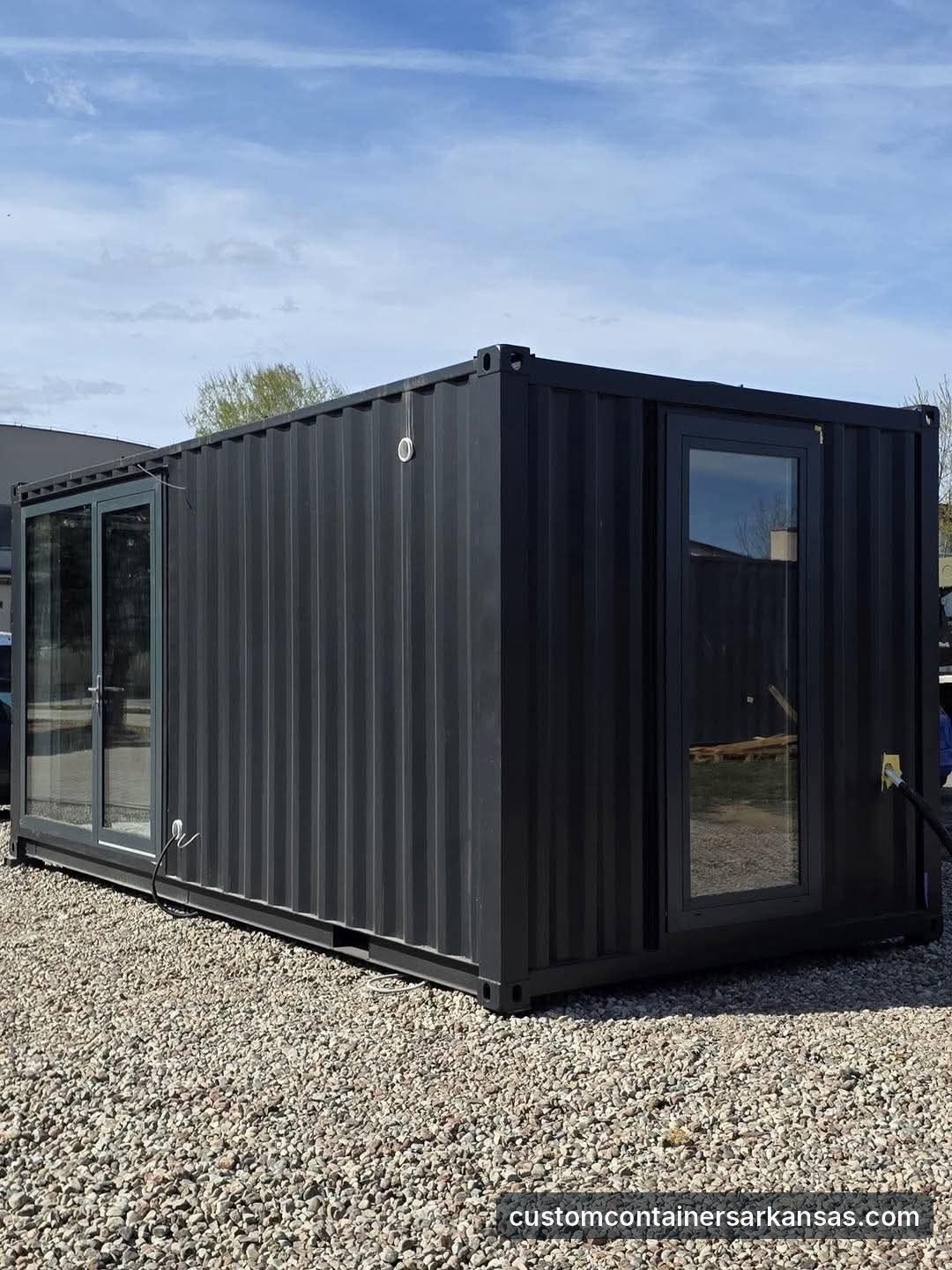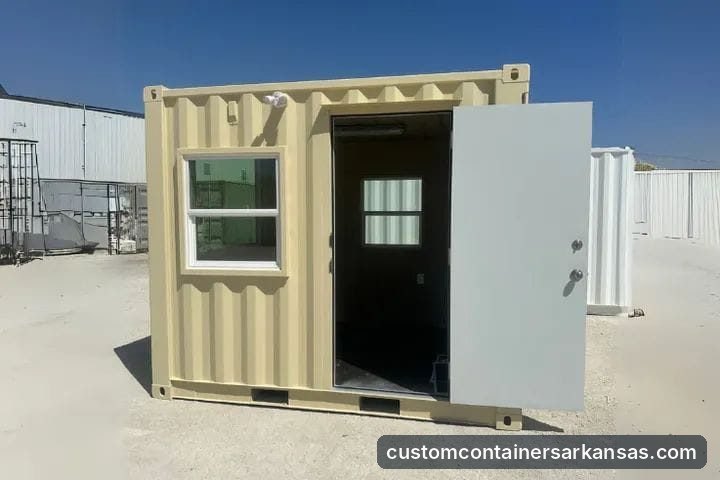
A generator enclosure container is a steel container set up to house a generator or other powered equipment outdoors: it keeps the weather off, locks against theft, and gives a technician room to work. The hard part isn't the box. It's airflow, exhaust and access, and the right answers come from your generator's maker and your installer. This guide covers what to check, where to place it, who signs off, and how our 40ft ventilated equipment enclosure is built.
What a generator enclosure container does
A container enclosure does four jobs:
- Shelter. Rain, sun and debris stay off the equipment and its controls.
- Security. A locked steel box is harder to break into than an open pad, and it hides what's inside.
- Organization. Fuel filters, tools, spare parts and manuals can live next to the equipment.
- Access. Doors in the right places let a technician service the equipment without moving it.
What it doesn't do on its own is make a generator safe to run. That depends on how the generator is installed, and it's work for professionals.
Our 40ft generator enclosure container
Our 40ft ventilated equipment enclosure is a ready-made unit for gear that needs to breathe. Here's its listed spec:
| Feature | What you get |
|---|---|
| Outside size | 40' L × 8' W × 9'6" H |
| Airflow | Large louvered vents on both long sides |
| Floor | Steel grating floor that lets air and water pass through |
| Access | Roll-up doors along one side, cargo doors on the end |
| Finish | Charcoal grey paint |
| Condition | Shown in your written quote |
It suits generators, pumps, compressors, battery banks and electrical gear, or ventilated storage for tools and wet equipment. Whether it suits your generator depends on the generator's size, exhaust and cooling needs, so have your electrician or equipment supplier check the setup before you order.
Airflow: your generator's maker sets the numbers
Engines and alternators make heat. A generator needs cool air coming in and hot air going out, or it can overheat and lose output. How much air it needs depends on the model, so the numbers come from the maker's installation instructions, not from us or from a rule of thumb.
What to ask your supplier or installer:
- How much airflow does this generator need, and are the enclosure's louvered vents enough, or does it need fans or ducting?
- Which way should cooling air flow? Hot air blown out should not be pulled straight back in.
- What clearances does the maker require around the generator for cooling and service?
On site, keep the louvers clear. Don't stack parts, pallets or brush against the outside of the vents, and keep weeds and leaves cut back. The grating floor lets air and water pass through, so don't cover it with mats or boards.
Exhaust and carbon monoxide
Generator exhaust contains carbon monoxide, which you can't see or smell. The EPA's carbon monoxide guidance says never to use a portable generator inside homes, garages, crawlspaces, sheds or similar areas, and to use generators only outside and far away from windows, doors and vents.
So be clear about what an enclosure is for:
- A portable generator does not go inside a container. Run it outside, away from the container's doors and vents and away from any building.
- A generator housed in an enclosure needs its exhaust installed by a qualified professional, following the generator maker's instructions, so exhaust leaves the enclosure and stays away from people and buildings.
- Nobody should work inside while the equipment is running unless your installer's setup is designed for it.
Fuel storage, fire safety and electrical connections are also part of the installation. Ask your installer and your local building office or fire official what applies.
Service access and placement
Plan the spot around the people who will maintain the equipment.
- Leave working room in front of the roll-up doors so a technician can stand, kneel and open panels. Leave room at the end doors too, if equipment will be moved in or out with a forklift.
- Set it level on a firm base, such as compacted gravel, solid blocks under the corners or a slab, so the doors open and close properly.
- Keep it out of low spots where water collects.
- Think about the cable run. Your electrician decides where power leaves the enclosure and how it reaches the building, transfer equipment or load.
- Mind the neighbors. The vents let sound out as well as air in. If noise matters, ask your supplier about your generator's needs.
Need lights, outlets or shelving inside for service work? Ask about custom container modifications, which are built in our Marion yard before the container ships.
When this enclosure isn't the right fit
- You need sound attenuation. We don't sell this unit as a sound-dampening enclosure.
- Your generator came with its own enclosure and the maker says to install it in the open.
- You only need storage. If the gear inside doesn't need airflow, our 40ft roll-up door storage container gives the same bay-by-bay access with four roll-up doors along the side, plus wall vents in each bay.
- You plan to run a portable generator inside. Don't. See the section above.
Who signs off before it runs
A container enclosure brings several trades together. Line these up early:
- Your equipment supplier, for airflow, exhaust and clearance requirements.
- A licensed electrician, for connections, grounding and any transfer equipment.
- Your local building office or fire official, for permits, inspections and fuel rules.
Hooking up powered equipment may need an electrician and local approval, so ask before delivery, not after.
Get your generator enclosure quoted
Tell us what equipment will go inside, its approximate size, how you'll service it, and your delivery ZIP. A photo of the spot helps us plan the delivery. We'll be in touch within 1 business day with a written quote that states the unit's condition and includes delivery and sales tax. Payment is by bank transfer, and our bank details come with the quote. Text or call (870) 384-8454, or email info@customcontainersarkansas.com. Our yard isn't open to visitors, so every unit is delivered to you.
Request your generator enclosure quote. Delivery and sales tax are included.
Frequently asked questions
Can I run a portable generator inside a container?
No. The EPA says never to use a portable generator inside homes, garages, sheds or similar areas, because carbon monoxide builds up quickly. Keep portable generators outside, away from windows, doors and vents.
Is the ventilated enclosure soundproofed?
We don't sell it as a sound-dampening enclosure. It's built for airflow, with large louvered vents. If noise matters at your site, ask your equipment supplier what your generator needs.