This guide is general information, not legal advice. Container rules are set mostly by cities, counties and other local governments, they vary from place to place, and they change. Always confirm with your local offices before you order.
The short answer: rules are local, and they vary
There is rarely one statewide answer to "do I need a permit for a shipping container?" In most of the US, the rules that matter for a container are written and enforced locally: by a city, a county, or in some states a town, township, borough or village. Some building rules may come from the state, but they are usually applied through your local building office. HOAs and deed restrictions can add their own limits on top.
What decides your answer is usually the same everywhere:
- Where it sits: inside or outside city limits, and in a residential, commercial, industrial or agricultural zone.
- How long it stays: a few weeks or months for a move or a building job, or permanently.
- How you use it: storage only, or a space where people work, gather or live.
- What you change: a plain box, or one with doors, windows, power, plumbing or HVAC added.
Zoning and setbacks
Zoning decides whether a container is allowed on a property at all, and how it is classified. Many places treat a storage container as an accessory structure, like a shed or detached garage, and others have rules written for containers specifically. Things to ask about:
- Whether containers are allowed in your zone, and whether they need a zoning permit or other approval.
- Setbacks: how far the container must be from property lines, the street and other buildings.
- Placement: for example, behind the house rather than in a front yard or driveway.
- Size and number: limits on footprint, height, stacking or how many containers a lot may have.
- Appearance: paint color, screening with a fence or plants, and whether old shipping markings must be covered.
Temporary vs permanent placement
Many local codes separate temporary containers from permanent ones. A container on a building site, or in a driveway during a move or remodel, may be allowed for a set period, sometimes with a simple permit, and must then be removed. A container that will stay for good is more likely to be treated as a structure, with zoning, setback and possibly foundation requirements. If you plan to buy a container and keep it, say so when you ask, so the answer fits your situation.
Building permits when a container is modified or occupied
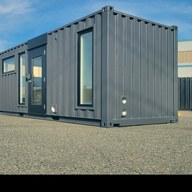
A plain storage container that nobody goes inside for long is the simplest case. Once a container is turned into an office, studio, workshop, cabin or any space people use, such as our 40ft office container, a 10ft workshop or a custom camper / tiny cabin, it is generally treated as a building. That can bring:
- Plans or drawings, and a building permit, before it is placed.
- Requirements for the foundation and how the container is attached to it.
- Separate permits and inspections for electrical, plumbing, gas and HVAC work.
- Energy, insulation, ventilation and accessibility questions, depending on the use.
We build doors, windows, insulation, shelving, electrical and AC at our yard in Marion, Arkansas before the container ships. Electrical work may still need a licensed local electrician to connect power on site, and your local office may want to inspect it. Ask your building department what it needs to see before you order a custom build or a specialty container. Building in Arkansas? Our Arkansas container ADU & tiny cabin guide explains the state's 2025 ADU law.
HOA covenants and deed restrictions
Even where the city or county allows a container, an HOA or a deed restriction may not. Many subdivisions limit outbuildings, storage structures, colors, or anything visible from the street, and some require approval from an architectural committee. Read your covenants, and ask your HOA in writing if anything is unclear.
Floodplains, wind and tie-downs
If your property is in a mapped flood zone, placing a container may need extra review, and you may be asked how it will be elevated or anchored so it can't float or shift in a flood. In areas exposed to hurricanes, tornadoes or strong wind, local rules may call for tie-downs or anchoring, especially for occupied containers. Your local floodplain or building office can tell you whether your parcel is affected and what is required. You can look up your address on the FEMA Flood Map Service Center before you call, and coastal owners can find storm-season planning tips in the Ready.gov hurricane preparedness guide.
Fire safety and exits for occupied use
For a container people work in or sleep in, expect fire and life-safety questions. Common topics include the number and size of exit doors, emergency escape windows for sleeping rooms, smoke alarms, and clearance from other buildings. On commercial sites, the local fire department may also care about fire lanes, hydrant access and what is stored inside, especially fuel or chemicals.
Commercial vs residential property
Commercial and industrial sites are often more open to containers, but they come with their own steps: a site plan review, parking and drive-aisle requirements, fire access and sometimes screening from the street. Residential lots usually have tighter rules on placement, size, appearance and how long a container can stay. Farms and agricultural land are often treated more simply, but always confirm.
Who to call: a step-by-step checklist
- Find out who governs your parcel. Check whether the property is inside city or town limits. Your property tax record or the county assessor's office can tell you. In some states, a township or borough handles zoning instead.
- Call the planning or zoning office for that city, county, town or township. Describe the container size, how long it will stay, where it will sit and how you will use it. Ask whether it is allowed and what approval you need.
- Ask about setbacks, placement, size limits and appearance for your zone, and whether a sketch or site plan is required.
- Call the building department if the container will be an office, studio, workshop or anything people occupy, or will have power, plumbing or HVAC. Ask which permits and inspections apply.
- Check flood and wind requirements with the floodplain or building office if you are near a river, a coast or in a mapped flood zone.
- Check with the fire department or fire marshal for commercial sites and occupied containers.
- Read your HOA covenants or deed restrictions, and get any HOA approval in writing.
- Ask for everything in writing, and keep approvals on hand for delivery day.
- Ask us for specs. We can send dimensions, weights, door positions and photos of the container for your application.
What to have ready when you call
- The property address or parcel number
- Container size: 10ft, 20ft or 40ft, standard or high cube
- Where it will sit, ideally on a simple sketch with distances to lot lines
- How long it will stay, and what you will use it for
- Any doors, windows, power, plumbing or HVAC you plan to add
State pages
We deliver to all 50 states from our yard in Marion, Arkansas. Alaska, Hawaii and the Florida Keys depend on freight options, so ask us. Our state pages cover local uses, weather and site access, with a short note on local rules: Alabama, Arizona, California, Colorado, Florida, Georgia, Illinois, Indiana, Iowa, Kansas, Kentucky, Louisiana, Michigan, Minnesota, Mississippi, Missouri, Nevada, New York, North Carolina, Ohio, Oklahoma, Pennsylvania, South Carolina, Tennessee, Texas, Virginia, Washington, Wisconsin. Not listed? We still deliver there. See all states we ship to. In Arkansas, read our Arkansas permits guide.
State-by-state notes
A short note for each state we have a page for. Each one links to that state's delivery page, which covers local uses, weather and site access. These are general notes, not legal advice: always confirm with your local office.
- Alabama: Alabama cities and counties each handle containers their own way. Some treat a container as an accessory building, some limit them in neighborhoods, and coastal areas may have flood-zone or wind rules.
- Arizona: In Arizona, container rules come mostly from cities, towns and counties, and they range widely. Metro suburbs and master-planned communities often limit containers in residential areas or treat them as accessory structures, while rural county land may be simpler.
- California: California cities and counties often have detailed rules for containers, especially in residential areas, coastal zones and fire-risk areas. A container used as an office, studio or any space people occupy is usually treated differently from storage.
- Colorado: Colorado container rules are set mostly by cities, towns and counties, and mountain counties and resort towns can be especially strict about appearance and placement. Many subdivisions also have HOA covenants.
- Florida: Florida cities and counties set their own rules for containers, and many have specific requirements for anchoring, flood zones and wind. Some treat a container as an accessory building that needs approval, and HOAs often have their own restrictions.
- Georgia: Georgia cities and counties write their own rules, and metro Atlanta suburbs can be quite strict about containers on residential lots. Some places treat a container as an accessory building, some limit how long a temporary one can stay, and HOAs often add rules.
- Illinois: In Illinois, cities, villages and counties set their own container rules, and they differ a lot between Chicago-area suburbs and rural downstate counties. Suburban codes often limit containers on residential lots or allow them only for a set time during a move or remodel, and using a public street or alley may need separate permission.
- Indiana: Indiana cities, towns and counties each decide how they handle containers, and the rules tend to be stricter inside city limits and in subdivisions than on rural land. Some places treat a container like a shed or accessory building, and offices or workshops with power may need building and electrical permits.
- Iowa: Iowa cities set their own container rules inside city limits, and county zoning applies in rural areas where the county has adopted it. Farm use may be treated differently from residential or commercial use, so say how you'll use the container when you ask.
- Kansas: Kansas cities and counties set their own rules for containers. Inside city limits and in suburban subdivisions, expect rules on placement, size and appearance, and sometimes HOA covenants.
- Kentucky: Kentucky leaves container rules to local governments, so they change from one city and county to the next. Some places treat a container like a shed or accessory building, others limit them in residential areas.
- Louisiana: In Louisiana, rules for containers are set locally by parish and city governments, and they vary a lot. Flood-zone rules can affect where and how a container sits, and some areas treat a container like any other accessory structure.
- Michigan: Michigan cities, townships and villages each set their own container rules, and many treat a container like an accessory building with setback and size limits. Outside city limits, township zoning usually applies.
- Minnesota: Minnesota cities and townships each set their own container rules, and counties often handle zoning in unincorporated areas and on shoreland near lakes and rivers. Containers people work in usually need a building permit.
- Mississippi: Each Mississippi city and county sets its own approach to containers. Cities may treat one as an accessory building and look at placement and appearance, while rural county land is often handled differently.
- Missouri: Missouri leaves most container rules to cities and counties, and they vary a lot. Some suburbs restrict containers in residential areas or treat them like other accessory buildings, while rural counties may have few rules at all.
- Nevada: Nevada cities and counties each set their own rules for containers, and metro areas and HOA communities usually have the most detailed ones. Rural counties may be simpler, but always confirm.
- New York: In New York, container rules are set locally by the city, town or village. Many towns treat a container like an accessory structure, and anything people work in usually needs a building permit.
- North Carolina: North Carolina cities and counties handle containers in different ways. Some treat them as accessory buildings, some limit them in residential zones, and coastal and mountain counties may add rules for flood areas, wind or steep slopes.
- Ohio: Ohio leaves container rules to cities, villages, townships and counties, and they vary a great deal. Many cities and suburbs restrict containers on residential lots or allow them only for a short time, and townships handle zoning in some rural areas.
- Oklahoma: Oklahoma cities set their own rules, and rural land outside city limits is often handled differently from city lots. Some cities treat a container like an accessory building, and some limit them in residential areas.
- Pennsylvania: Pennsylvania container rules are set locally, and many places are covered by a township or borough rather than a city or county, so make sure you call the right office. Suburban townships often limit containers on residential lots or allow them for a set time, while farmland may be simpler.
- South Carolina: South Carolina cities and counties set their own container rules, and coastal towns, historic districts and HOA communities often have the strictest ones. Flood zones and wind requirements can affect placement near the coast.
- Tennessee: Tennessee cities and counties each decide how they treat containers. Some see a container like a shed, others like any other accessory building, and many subdivisions add HOA covenants on top.
- Texas: Texas cities set their own rules for containers, and they can differ a lot from one town to the next. Some treat a container like an accessory building and look at size, setbacks and appearance.
- Virginia: Virginia container rules are handled locally, by cities, counties and towns, and suburban counties and HOA communities often have detailed requirements. A container used as an office or other occupied space is generally treated as a building, with building and trade permits.
- Washington: In Washington, cities and counties each decide how they treat containers, and many handle one like an accessory structure with setbacks and size limits. Containers people work in usually need a building permit, and shoreline rules can apply near water.
- Wisconsin: Wisconsin cities, villages and towns each handle containers their own way, and county zoning often applies in rural towns and on shoreland near lakes and rivers. Containers people work in usually need a building permit.
Frequently asked questions
Is there one set of shipping container rules for each state?
Not usually. Most rules that affect a container, such as zoning, setbacks and placement, are set by your city, county, town, township or borough, so two neighboring towns can treat the same container very differently. Always check with the local office for the property.
Do I need a permit for a storage container on my own land?
Sometimes. Plain storage on farmland or an industrial lot often needs little or no approval, while the same container on a residential lot may need a zoning approval or have to meet setback and placement rules. Ask your local planning or zoning office.
Does a container office or studio need a building permit?
Usually, yes. Once people work, gather or sleep in a container, it is generally treated as a building. That can mean plans, a building permit and inspections for the structure, electrical, plumbing and HVAC.
Who is responsible for getting the permit?
The property owner, or the person placing the container. We can send dimensions, specs and photos of the container for your application, and we build add-ons in Marion, Arkansas before shipping, so tell us early if your local office needs specific details.
Is this legal advice?
No. This guide is general information to help you ask the right questions. Rules change and vary by location. Confirm everything with your local officials before you order.