Where shipping container myths come from
Shipping container myths spread because containers look simple. A steel box with doors seems like it should do anything: stay dry forever, sit anywhere, go underground, ride out a tornado or become a home overnight. Some of that is close to true. Some of it can cost you a ruined load or put people at risk. Here are seven we hear often, what's actually true, and where to read more.
Myth 1: "Containers never leak or sweat"
A good container is wind and watertight, meaning rain and wind stay out when the doors are shut and the seals are sound. That doesn't make it dry inside.
Two things cause water inside a container:
- Leaks, from a rust hole, a damaged roof panel or worn door gaskets.
- Condensation, often called container rain. Warm, damp air meets cold steel and water forms on the ceiling and walls, then drips onto whatever's stored.
Condensation surprises people most, because it happens in a box with no holes at all. In the Mid-South, humid days followed by cold nights make it common in winter. Vents, desiccants, careful packing and, for some uses, insulation keep it in check. Our guide on how to stop shipping container condensation covers how to tell the two apart and what to do about each.
Myth 2: "All used containers are the same"
"Used" covers a wide range. One used container might have plenty of life left, with tight doors and a solid floor. Another might be fine for a hay barn but not for paper records.
Sellers use grade names such as one-trip, cargo-worthy, wind and watertight and as-is. Those names help, but they aren't one fixed standard, and two sellers can mean different things by the same word. What matters is the condition of the specific unit you're buying.
Our guide to shipping container grades explains what each term does and doesn't tell you. Then use our checklist on how to inspect a used shipping container to check the actual box. With us, the condition of the unit is stated in your written quote.
Myth 3: "You can bury one as-is"
This is one of the riskier myths. A container is strong where it was designed to be strong: the corner posts and frame, which carry the weight when containers are stacked on a ship. The side walls and roof weren't built to hold back soil pressing in from the sides and above. Wet soil adds even more pressure.
Bury a plain container and the walls or roof can bow or cave in over time, and water can collect around the steel and speed up rust. Projects that do put a container below ground use an engineer's design, added structure and serious drainage and moisture protection.
If you want storage built into a hillside or berm, talk to an engineer first. Don't treat a standard container as a below-ground room.
Myth 4: "A steel box will protect you in a tornado"
It won't, and this is the myth that matters most for safety. A standard container isn't designed or tested to protect people from tornado winds or flying debris. Unless it's anchored properly, high winds can also move or roll it.
Rooms built to protect people from tornadoes are engineered and tested for that one job. A shipping container doesn't become one just because it's made of steel.
If you need a place to go during a tornado, plan for a purpose-built safe room or a designated public one, and follow your local emergency management guidance. Use your container for what it does well: secure, dry storage.
Myth 5: "It needs a concrete slab"
For storage, usually not. A container's weight rests on its four bottom corners, so what it needs is a level, firm base under the corners that keeps the steel floor off wet ground. Common choices are:
- compacted gravel
- concrete blocks or pads under each corner
- railroad ties
- an existing concrete or paved surface
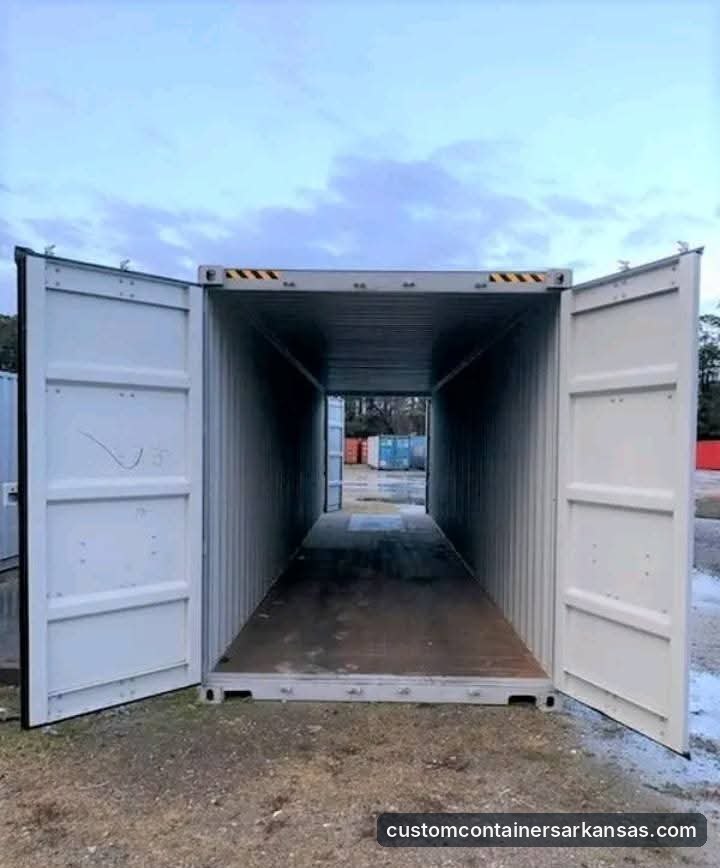
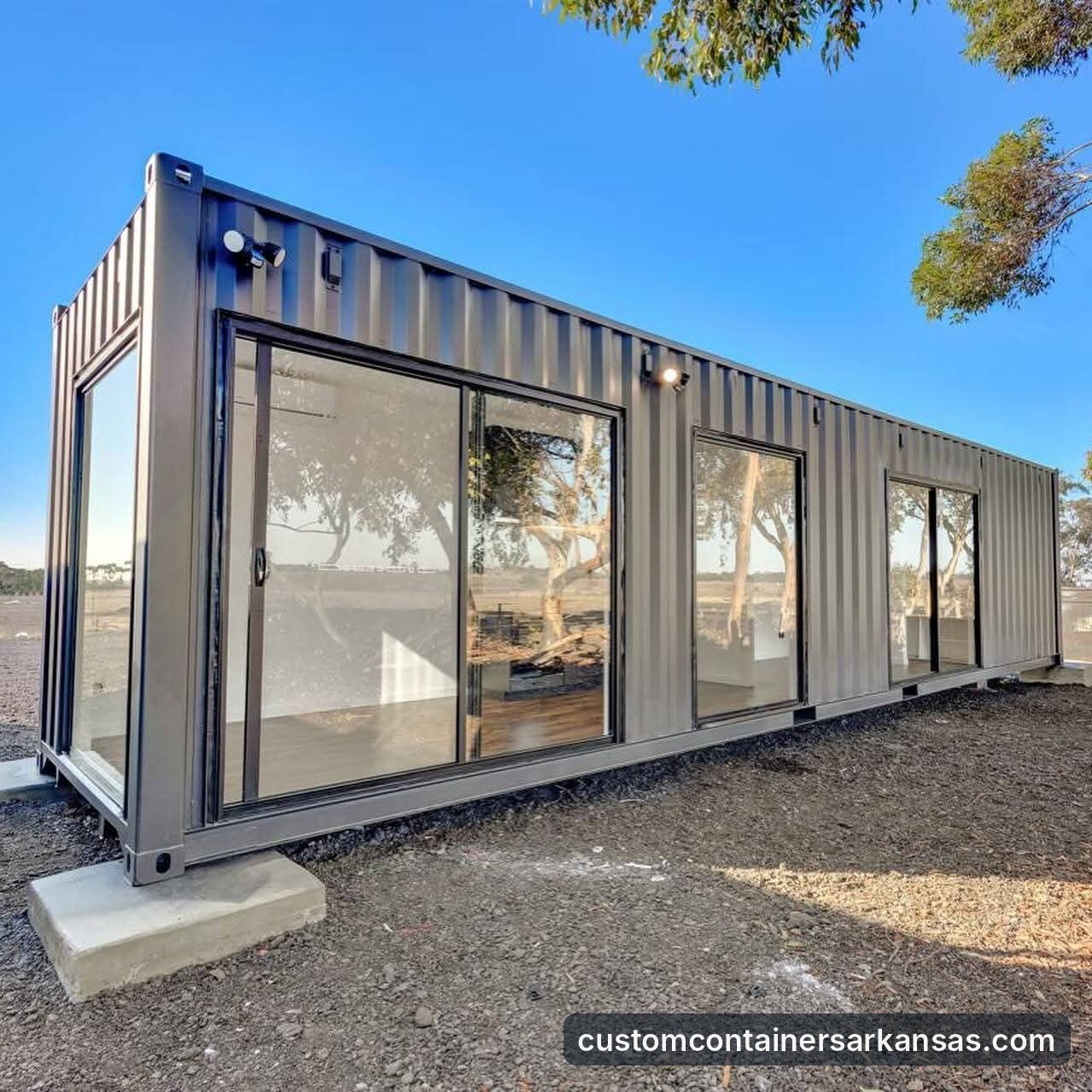
The 40ft build in the photo above sits on concrete blocks. Level matters more than the material, because a twisted container has doors that won't close right.
Larger builds, offices and anything people use daily may need more, and some places have rules for that. Our FAQ answer to do containers need a foundation? has the short version. Your city or county has the final word.
Myth 6: "Steel boxes rust through in a few years"
Containers are built to handle salt air and rough handling at sea, and they're painted to protect the steel. A sound container on a dry, level base doesn't rust through quickly in normal use.
What speeds up rust is the same thing every time: standing water and damaged paint. Watch for:
- dents in the roof that hold puddles
- a container sitting directly on wet ground
- scrapes and chips left bare
- damp air trapped inside
Surface rust is normal on a used container. Look for holes, flaking and soft spots, especially on the roof and lower rails. Brush, prime and paint small spots before they spread. How long your container lasts depends on its starting condition, its base and how it's looked after, so be wary of anyone who promises a set number of years.
Myth 7: "Any container is fine to live in"
Turning a container into a cabin, office or home is a real project, not just a matter of adding a bed. Before people spend time inside, think about:
- The floor. Container floors are often treated for shipping. In a space people use, seal or cover the original floor, or replace it.
- Insulation and moisture. A bare steel box is hot in summer and damp in winter. Our guide on how to insulate a shipping container compares the options.
- Openings, power and ventilation. Windows, doors, wiring by a licensed electrician and fresh air all need planning.
- Local rules. Many places treat an occupied container like any other building. Read our guide to the rules for occupied containers and confirm with your city or county before you build.
The bottom line
Most container problems come from one thing: treating every container as the same, simple box. Before you buy:
- Match the unit to the job. Plain storage, a workshop and a cabin need different things.
- Check the actual container, not just the grade name.
- Give it a level, dry base and keep water off the roof.
- Plan moisture control from day one.
- Check local rules before people use it.
- Don't use it as tornado protection or bury it without an engineer.
If you're comparing options, our one-trip and used containers page shows what's on offer.
Get a straight answer on your container
Tell us what you plan to store or build, the size you're thinking about and your delivery ZIP. We'll be in touch within 1 business day with a written quote that states the unit's condition and includes delivery and sales tax. Payment is by bank transfer, and our bank details come with the quote.
Request your written quote. Delivery and sales tax are included.
Frequently asked questions
Are one-trip containers free of dents and rust?
Usually close to it, but they've been loaded, shipped and lifted once. Expect minor marks. The condition of the actual unit is stated in your written quote.
Can I stack a second container on top of mine?
Containers are built to stack by their corner posts, but a stacked setup on your property is a structural question. Ask an engineer and your building office before you do it.