Where to drop a job site storage container
A job site storage container saves time only if it sits in the right place. Put it in the wrong spot and it gets moved halfway through the job, blocks a crane path, or ends up in a mud hole the first week of rain. A few minutes of planning before the truck arrives avoids most of that.
When you pick the spot, check three things on the site plan:
- Crane and truck paths. Keep the box out of crane swing areas, material laydown zones and the route concrete and delivery trucks will use. The spot that's empty on day one may be the busiest patch of ground by week three.
- The final grade. Don't set it where excavation, utilities, paving or landscaping will happen later. Ask the superintendent where finished work goes, and stay clear of it.
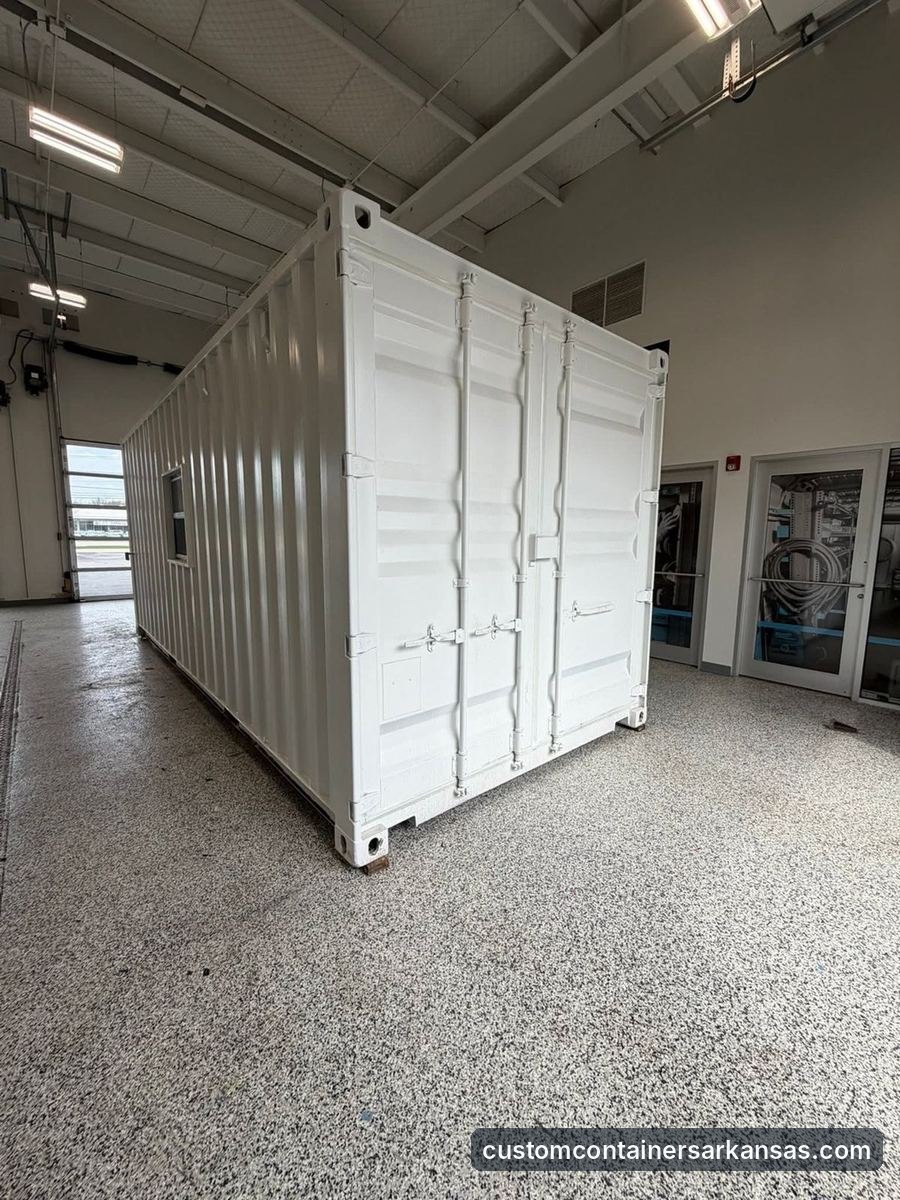
- Moving it later. The delivery truck needs straight-line room to back in, tilt and slide the box off. It needs the same room to pick it up. Don't let framing, fencing or stockpiles box it in.
Pick firm, level ground that drains. Compacted gravel or blocks under the corners keep the floor out of the mud and the doors lined up. Our site-prep checklist walks through ground and truck access, and our guide on where to put a shipping container covers drainage and door direction in more depth.
Doors facing the work
Every trip to the container is time off the tools. Face the doors toward where the work happens, with a clear, dry path between them.
- Standard end doors should point at the building or the main work area, not at a fence or the street.
- Leave swing room. Cargo doors open wide. Keep the area in front clear of pallets and debris so both doors open fully.
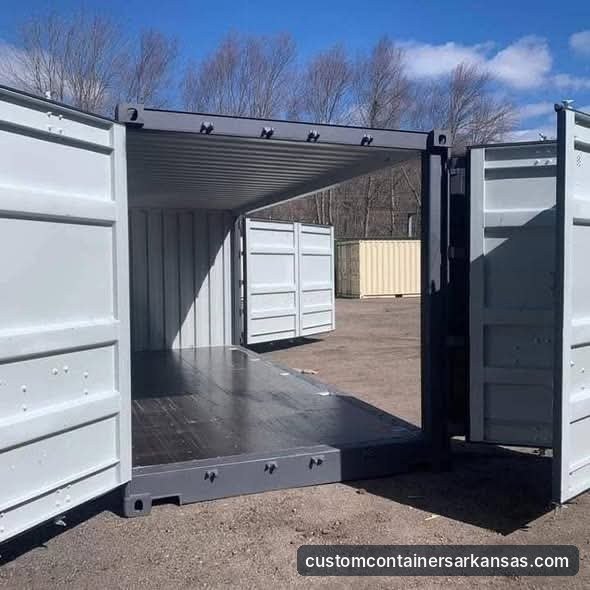
- Side access helps on busy sites. Our 20ft open-side container opens along its full length, so a forklift can load pallets from the side without digging to the back.
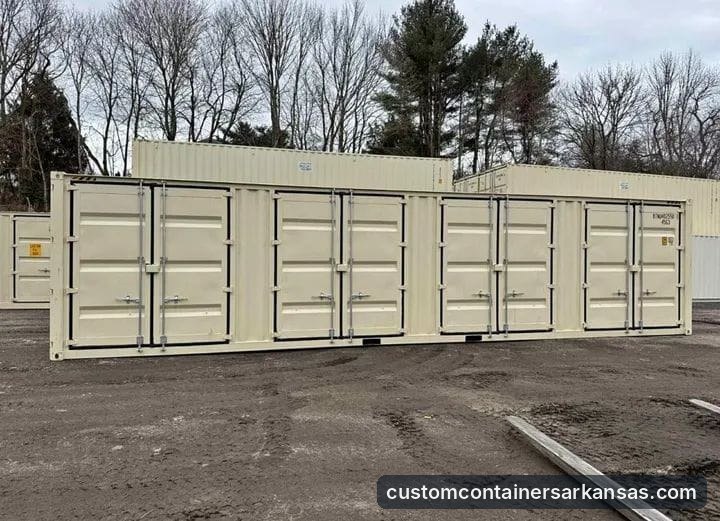
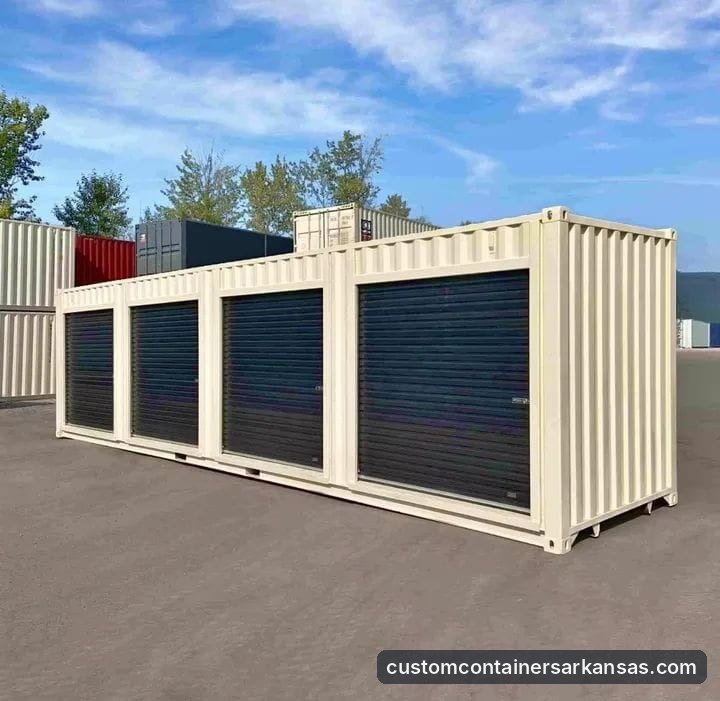
- Bay-by-bay access. Our 40ft roll-up door storage container, pictured above, has four roll-up doors along the long side. Each crew or trade can get its own lockable space.
If several trades share one standard container, the gear at the back ends up buried. Separate bays, or a second box, often save more time than the daily digging.
Shelving and racks for tools
A container with everything on the floor turns into a pile within a week. Simple racking keeps it usable:
- Heavy items low and near the doors. Generators, compressors and boxes of fasteners shouldn't be lifted onto high shelves.
- Long material on wall racks. Conduit, pipe and lumber stored along one wall leave a clear aisle down the middle.
- Small tools in labeled bins or a locked gang box inside the container.
- Keep the aisle clear. If someone has to climb over gear to reach the back, it'll be left by the door instead.
- Hooks for cords and hoses keep them off the floor and untangled.
Fasten tall shelving so it can't tip. If you want shelving, lighting or partitions built in before delivery, ask about it when you request a quote.
Fuels and flammables: follow OSHA rules
Fuel cans, solvents, adhesives and other flammable liquids need more thought than tools. OSHA has rules for storing flammable liquids on construction sites, and your company's safety plan should follow them. Your safety lead or the general contractor's site rules will spell out what applies.
General good practice:
- Don't mix fuel in with the general tool storage. Keep flammables in safety cans or a cabinet made for flammable liquids, in a space set aside for them.
- Ventilation matters. Fumes build up in a closed steel box.
- No ignition sources nearby. No smoking, and no running engines inside the container.
- Keep fuel away from any space where people work, including a site office.
- Never run a generator or gas-powered tool inside the container. Carbon monoxide builds up fast in an enclosed space.
When in doubt, check with your safety lead before you load it.
Locking up and key control
A container full of tools is a target, especially over long weekends and holidays when the site is quiet. The lock matters, but so does who has the key.
- Use a lock that hides the shackle, such as a puck lock inside a welded lockbox. Our guide to shipping container locks and security explains the options.
- Keep a key list. Write down who has a key, and collect keys when people leave the job.
- Rekey or swap locks when a key goes missing.
- Light the doors. A motion-sensor or solar light over the doors removes a thief's cover.
- Photograph serial numbers of tools and equipment, and keep the records somewhere other than the site.
Our 10ft workshop and guard shack comes with a lockbox on its cargo doors, an LED flood light over the doors and an exterior power inlet. It can serve as a secure lockup, a small tool shop or a gate house on the same site.
Pair it with a site office
Many sites end up with two boxes: one for tools and material, one for people and paperwork. Keeping them separate keeps drawings dry and away from fuel and dust.
A container office sits at ground level, with no stairs or axles, so it sets up much like a storage container. Our 40ft office container can be one open room or split into as many as four separate rooms, each with its own door, and its sliding windows can be fitted with steel security shutters. For smaller sites, the 10ft workshop above works as a gate house or check-in point.
If you're weighing a container office against a trailer, our container office vs office trailer guide covers setup, security and layout limits.
Place the office where the superintendent can see the gate and the storage container. Good sight lines add security without extra hardware.
When the job ends
Plan the end of the job before it starts:
- Leave a clear path for the pickup truck, the same as on delivery day.
- Empty it fully, including fuel cans, chemicals and trash.
- Sweep it out and check the floor, seals and doors for damage.
- Remove your locks and hand back or record keys.
- Decide what's next. A container you own can move to the next job, go back to the yard or become long-term storage.
If you only need storage for a single project, see our job-site storage rentals page.
When a container isn't the right fit: if the site has no firm ground a truck can reach, or the crew needs storage that moves every few days, a trailer or gang boxes may be simpler.
Get a job site container quoted
Tell us the job site ZIP, what you'll store, how many crews need access and whether you want an office too. List any extras, such as shelving, lighting, a lockbox or roll-up doors. We'll be in touch within 1 business day with a written quote that includes delivery and sales tax. Payment is by bank transfer, and our bank details come with the quote.
Request a quote for your job site container. Delivery and sales tax are included.
Frequently asked questions
Should a job site container be locked with the crew's padlocks?
It's simpler to use one lock system the site controls, such as a puck lock in a lockbox, with a written key list. Personal padlocks make it hard to know who can get in.
Can one container serve several trades on the same site?
Yes. A container with several roll-up doors along the side can give each trade its own lockable bay, so crews aren't sharing keys or digging through each other's gear.