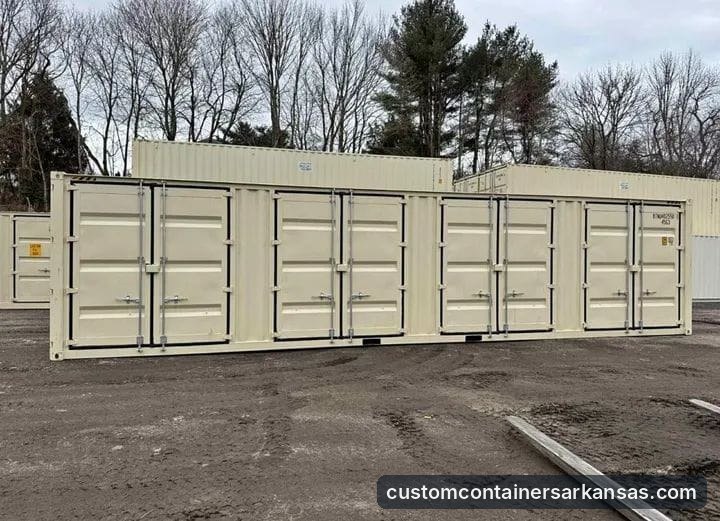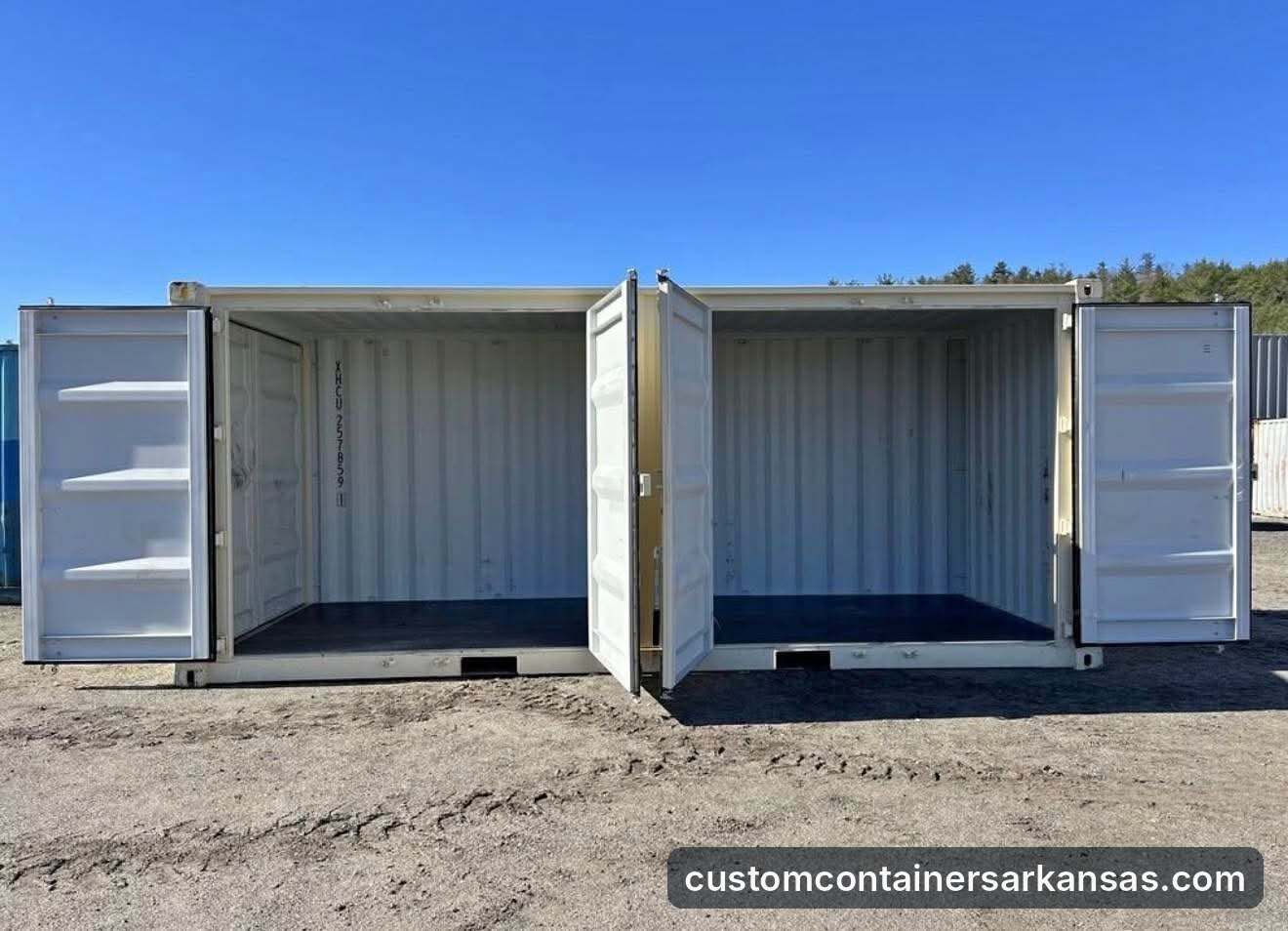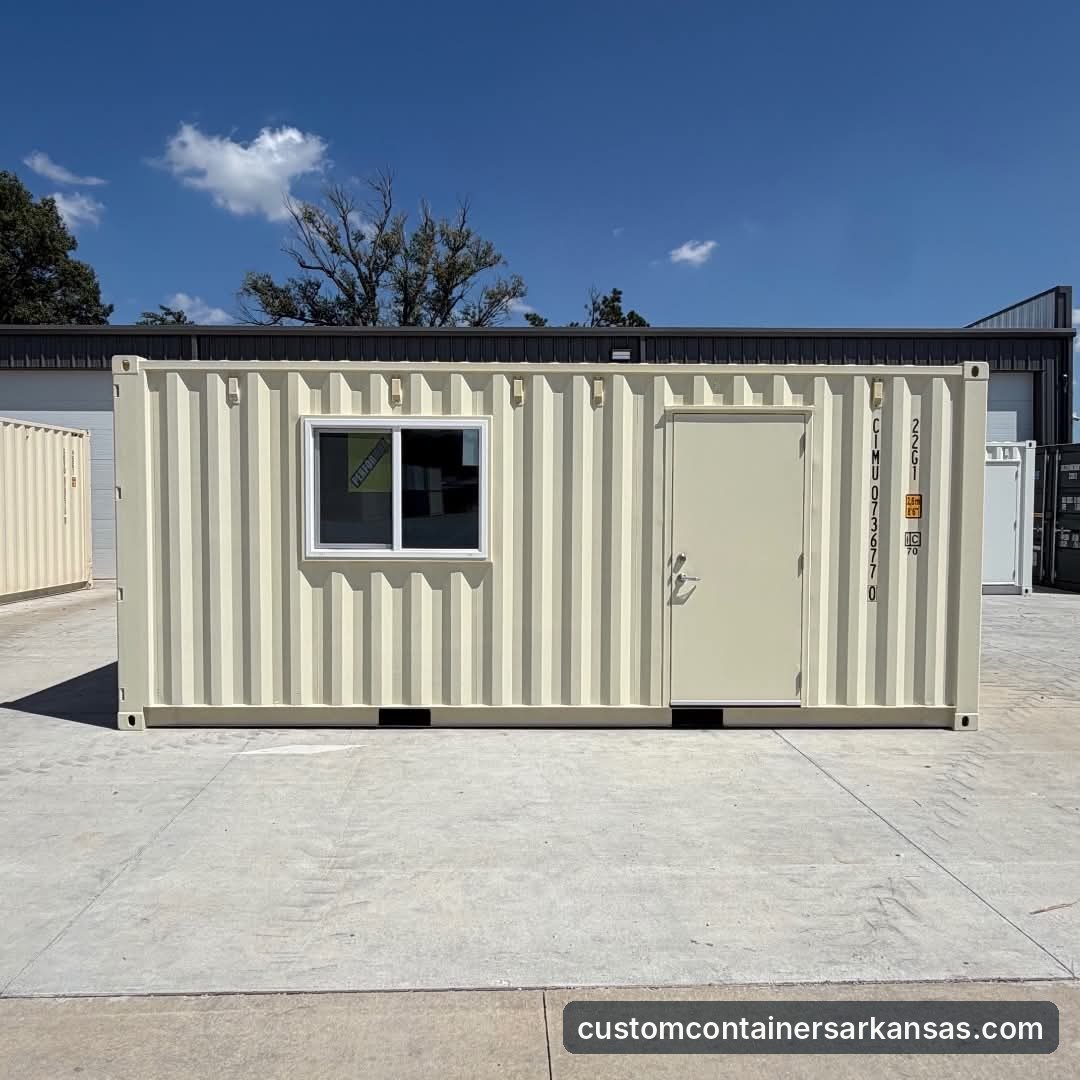
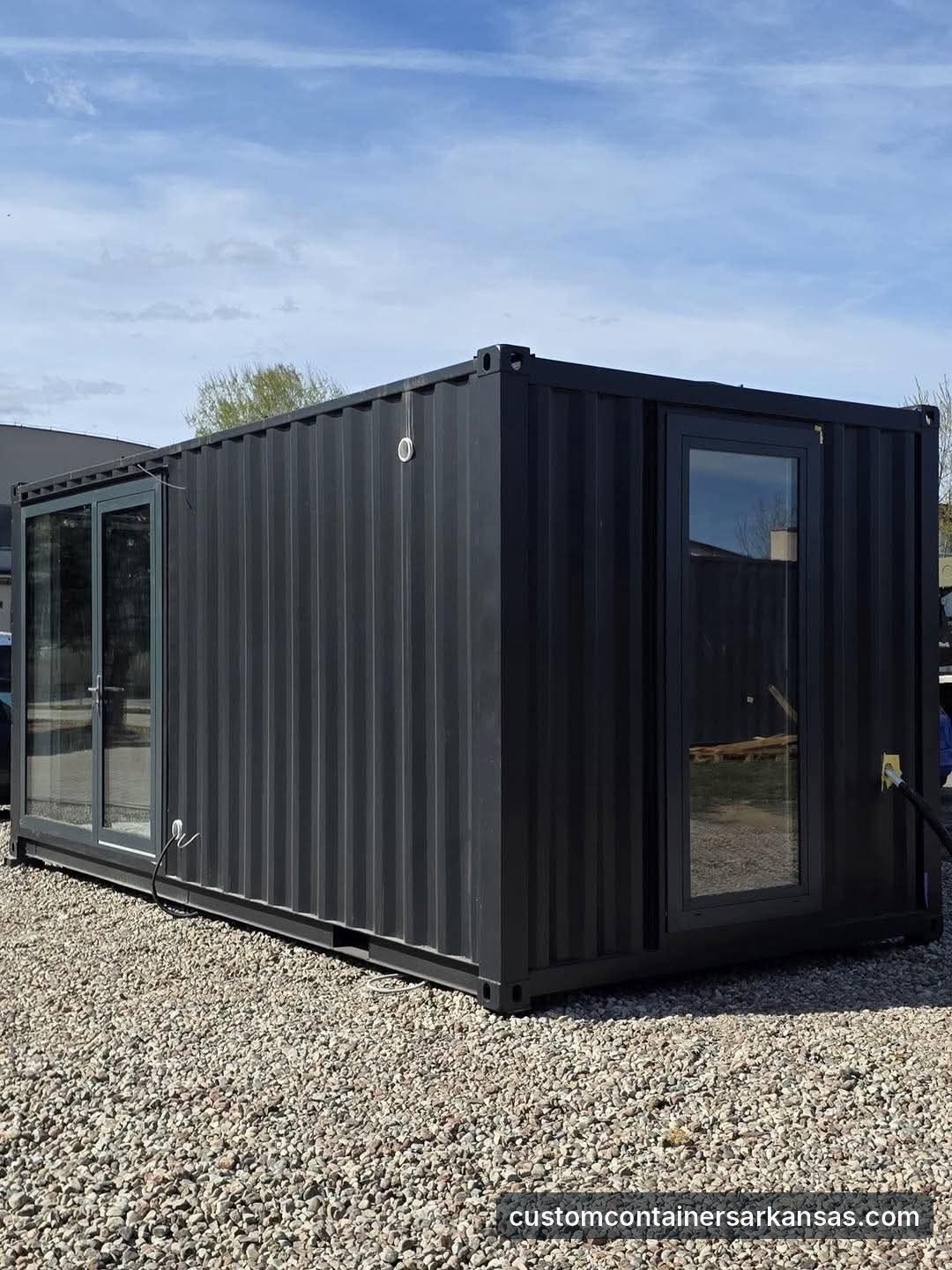
A gravel pad for a shipping container is a firm, level, well-drained bed of compacted stone for the container's corners to rest on. In Northeast Arkansas it often decides whether a container stays level with doors that close easily, or slowly settles into wet ground. This is general guidance for storage containers. For an office, a cabin or anything people will spend time in, bring in a local site contractor.
Why the ground matters more than the box
A container carries its weight on its four corner castings, not on the middle of the floor. If the ground under one corner settles, the frame racks slightly, and the doors are usually the first thing to show it: they bind, won't latch, or stop sealing properly. Water then collects on the low side.
A good pad does three jobs at once:
- Support. The corners sit on something that won't sink.
- Level. The doors open, close and seal the way they should.
- Drainage. Rain runs off and away instead of pooling under the floor.
For plain storage, a gravel pad with blocks or ties at the corners is usually enough, as our answer to do containers need a foundation? explains.
Check your soil first: Web Soil Survey in 5 steps
Before you order stone, find out what you're building on. The USDA Natural Resources Conservation Service runs Web Soil Survey, a free online soil map.
- Open Web Soil Survey and start the app.
- Find your property by address or by zooming in on the map.
- Draw your Area of Interest around the spot with the rectangle or polygon tool.
- Open the Soil Map tab to see which soil types sit under your spot, with their names and descriptions.
- Check the Soil Data Explorer tab. Under Suitabilities and Limitations for Use, then Building Site Development, you'll find ratings such as dwellings without basements.
Those ratings were written with houses in mind, not containers. Still, the reasons listed for a poor rating, such as flooding or wetness, tell you what your pad has to deal with.
Crowley's Ridge vs Delta ground: what changes
Jonesboro sits on Crowley's Ridge, a narrow ridge above the flat Delta that was built up partly by centuries of wind-deposited sediment (Arkansas State University). That wind-blown silt is called loess. Off the ridge, the Mississippi River's alluvial plain is river-laid ground, and NRCS describes its soils as mostly loamy or clayey and mostly poorly or somewhat poorly drained (NRCS ecological site description).
In practice, that tends to change what you worry about:
| On the ridge | On the Delta flats | |
|---|---|---|
| Typical ground | Silty, often on a slope | Loamy or clayey, flat |
| Main worry | Runoff and washouts on sloped spots | Standing water and slow drainage |
| Pad focus | Level the slope carefully and steer uphill runoff around the pad | Build the pad up above the ground around it and give water a way out |
These are broad patterns. The Web Soil Survey report for your exact spot matters more than which side of the ridge you're on.
Sizing a gravel pad for a shipping container
Start with the container's outside size: a 20ft is 20' long and 8' wide, and a 40ft is 40' long and 8' wide.
- Make the pad bigger than the container on every side, so the corners don't sit near a crumbling edge.
- Add room at the doors. Each cargo door is about 4ft wide, so leave at least that much firm, level ground in front of the doors to swing them fully open.
- Stake the four corners and measure both diagonals. When they're equal, your layout is square.
- For a 40ft or a modified unit, ask us about extra supports along the length.
- Keep the truck's path open. The delivery truck needs a long, straight run in line with the pad. Our delivery-day checklist lists the clearances to plan for.
Base, compaction and drainage
- Call 811 before you dig. It's free, and local utilities mark their buried lines.
- Strip the grass, roots and topsoil down to firm soil. Organic material rots and settles.
- Don't dig a bathtub. On flat, clayey ground, a common approach is to build the pad up rather than dig it down, so water drains away from it.
- Consider a geotextile fabric on soft or clayey ground. Many contractors lay one under the stone to keep it from pressing into the mud.
- Use crushed, angular stone that locks together when compacted. Ask your quarry or supplier which product they sell for pad or driveway base.
- Place and compact in layers with a plate compactor or roller. How thick to build it depends on your soil and the load, so ask the supplier or a local site contractor.
- Check level across the whole pad with a long level or a laser, and shape the top so water sheds off it.
- Give water somewhere to go. A shallow swale on the uphill side can carry runoff around the pad. Don't send it onto a neighbor's property or a road.
Blocks or railroad ties at the corners
Most storage containers sit on solid concrete blocks or treated railroad ties placed where the four corners land. They keep the steel floor off the stone and let air move underneath.
- Set them on the compacted pad, not on loose stone.
- Level all four with each other. Over 20ft or 40ft, a laser or water level is easier than a short bubble level.
- Have them in place before delivery, and tell us which way the doors should face.
Wet-season timing in Northeast Arkansas
- Work the ground only when it's dry enough. Soil that smears or clumps on your boots won't compact well, and the pad can settle later.
- Skip frozen ground and icy stone during cold snaps. It can settle when it thaws.
- Build early. Finish the pad well before delivery, then walk it after a heavy rain and fill any low spots.
- Plan for delivery-day mud. A loaded truck can rut or bog down on a soft approach. If the ground is soft, we'll talk about moving the date.
Placement and permit rules depend on where you are. Inside Jonesboro city limits, check with the city. Outside, check with Craighead County or your own county. For offices, cabins, steep slopes or very wet ground, a local site contractor or engineer is worth the call.
Get your container quoted
When your pad is planned, browse our 20ft and 40ft shipping containers for sale in Arkansas, or see delivery details for shipping containers for sale in Jonesboro, AR. Tell us the size, your delivery ZIP and how you'll use it, and send a photo of the pad and the way in. We'll be in touch within 1 business day with a written quote. Payment is by bank transfer, and our bank details come with the quote. Text or call (870) 384-8454, or email info@customcontainersarkansas.com. Our yard isn't open to visitors, so every container is delivered to your prepared pad.
Request your written quote. Delivery and sales tax are included.
Frequently asked questions
Can I set a container straight on the ground without a pad?
On firm, dry, level ground some people do for short-term storage. On soft or wet ground the corners can sink and the doors start to bind, so a pad or corner supports is the better plan.
Should I pour concrete instead of building a gravel pad?
A slab or concrete footings is an option, especially for offices and finished builds. Ask a local site contractor what suits your soil and use, and check with your city or county first.